

A leaking pump triggers a costly chain reaction: halted production lines, labor-intensive cleanup, urgent maintenance tickets, and safety concerns.
In many conventional industrial pumps, one common source of leakage is the mechanical seal where a rotating shaft passes through the pump casing. When this component wears or fails, it can lead to fluid loss, unplanned downtime, and additional maintenance demands. This is one reason sealless pump designs are valuable in industrial fluid-transfer applications. However, "sealless" is frequently misunderstood. It doesn't mean zero seals or immunity from leaks.
Here is what sealless pump design actually means, how it cuts leak risks, and how to determine if it fits your operation.
What Does Sealless Mean & Why Do Traditional Seals Leak?
A sealless pump isolates and moves fluid without a conventional rotating mechanical shaft seal, eliminating a common potential leakage point in traditional pump designs. Mechanical shaft seals rely on thin fluid films between sealing surfaces to control leakage, but abrasive particles, dry running, excessive heat, pressure fluctuations, and vibration can accelerate wear or contribute to premature failure.
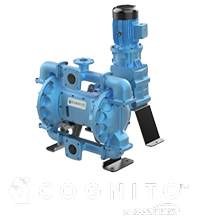
By eliminating conventional rotating mechanical shaft seals through the use of flexible diaphragms, magnetic couplings, or canned-motor designs, sealless pumps remove a common potential leakage point, helping reduce maintenance requirements and improve equipment reliability. Advanced solutions like Cognito EODD pumps combine sealless diaphragm technology with integrated leak detection to provide additional protection against fluid leaks. While static gaskets and O-rings remain essential for fluid containment, these components still require proper maintenance and inspection to ensure reliable performance.
Do Sealless Pumps Leak or Require Maintenance?
While sealless pumps remove rotating mechanical shaft seal failures, they are not entirely maintenance-free and can leak if neglected. Static gaskets, diaphragms, and pipe connections still require proper installation and routine inspection. Sealless technology simply shifts maintenance from complex dynamic seal servicing to simple diaphragm and valve checks.
How Do Sealless Diaphragm Pumps Work?
Diaphragm pumps use flexible barriers that flex back and forth to draw fluid in and push it out through check valves. Because the drive is completely isolated from the fluid side, no shaft seal is necessary.
This design handles solids, high viscosities, shear-sensitive materials, and dry running without damage. Whether selecting Non-Metallic EODD pumps for corrosive chemicals or Metallic EODD pumps for abrasive slurries, diaphragm pumps provide robust containment and self-priming operation.
Cognito EODD Pumps: Sealless Design With Added Leak Protection
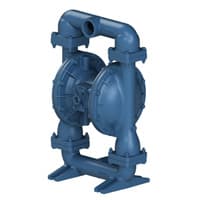
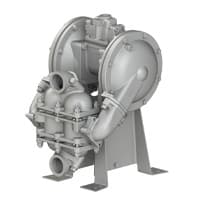
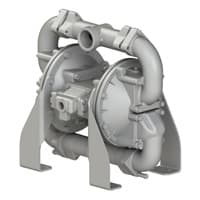
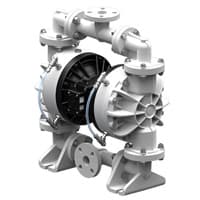
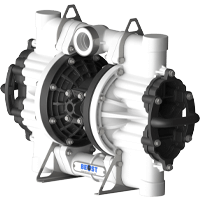
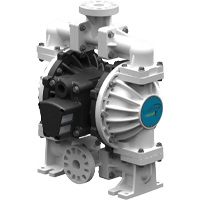
Part of the SANDPIPER® portfolio, Cognito EODD pumps pair sealless diaphragm technology with electric efficiency, leak detection, and built-in spill containment chambers.
They feature oversized diaphragms for extended life, integrated leak sensors for early failure warnings, and dry-run capability to withstand empty-tank conditions. Independent motors allow easy servicing without disturbing connected piping.
Ideal for chemical transfer, slurries, and aggressive fluids, Cognito pumps lower total cost of ownership across chemical, ceramic, and coating applications.
Sealless Pump vs. Mechanical Seal Pump: What's the Difference?
The core difference is where leaks can start. A mechanically sealed pump depends on a dynamic shaft seal at the fluid boundary. A sealless diaphragm pump doesn't, so that failure mode is gone, though others remain. Here's how the two compare on the factors that matter day to day.
|
Evaluation Factor |
Sealless Diaphragm Pump |
Conventional Mechanically Sealed Pump |
|
Mechanical shaft seal |
Not required at the fluid boundary |
Commonly required |
|
Primary leak concerns |
Diaphragms, gaskets, connections, and other containment components |
Mechanical seals, gaskets, connections, and other components |
|
Seal-related maintenance |
Eliminates conventional mechanical shaft seal servicing |
May require periodic seal inspection and replacement |
|
Dry-run capability |
Available in appropriately designed diaphragm pumps |
Depends on technology and seal arrangement |
|
Abrasive or solids-laden fluids |
Often well suited, depending on pump design |
Application-dependent; can increase seal wear |
|
Leak monitoring |
Can be integrated into the pump system |
Varies by design and monitoring configuration |
|
Overall maintenance demand |
Depends on diaphragm life, valves, and operating conditions |
Depends on seal life, bearings, and other wear components |
Read the table for what it says and what it doesn't. Sealless technology removes a specific failure mode. It doesn't remove every potential cause of leakage, and a fair comparison has to account for fluid characteristics, duty cycle, operating pressure, and pump configuration.
Those differences feed directly into total cost of ownership: replacement parts, maintenance labor, downtime, lost fluid, and cleanup and containment expenses. A pump that costs more upfront can cost less to keep running if it eliminates a recurring failure.
The lowest-maintenance option depends on the application, not simply on whether a mechanical seal is present.
Beyond Sealless: Why Leak Detection and Monitoring Matter
While sealless construction provides physical barrier protection, real-time monitoring adds crucial operational visibility. Cognito EODD pumps feature standard integrated leak-detection probes that can be connected to pump controls to automatically shut down the pump if diaphragm failure or fluid leakage is detected. Combined with spill-containment chambers, these features provide additional protection for the pump and process. When integrated with Cognito SmartInsights, maintenance teams gain access to real-time condition monitoring, preventive maintenance alerts, and remote equipment insights that can help reduce unplanned downtime.
How Do You Choose the Right Sealless Pump?
Selecting the right sealless pump requires evaluating your application's specific operating conditions, maintenance requirements, and fluid characteristics. Before choosing a pump, consider these key questions:
- What type of fluid are you transferring? Abrasive, corrosive, viscous, and solids-laden fluids require careful consideration of pump design and material compatibility.
- How frequently does your existing pump experience mechanical seal failures? Recurring failures may indicate an opportunity to reduce maintenance demands by switching to sealless technology.
- What happens if a leak occurs? Consider the potential impact on worker safety, production downtime, fluid loss, and cleanup costs.
- Does your application require dry-run capability or integrated leak detection? These features can provide additional protection against equipment damage and unexpected process interruptions.
- How do maintenance costs compare over the pump's lifespan? Evaluate replacement parts, maintenance labor, downtime, and recurring repairs rather than focusing solely on the initial purchase price.
Frequently Asked Questions About Sealless Pumps
-
Are sealless pumps completely leakproof?
-
No. Sealless pumps eliminate conventional mechanical shaft seals, but diaphragms, gaskets, connections, and other components can still wear or fail. Proper maintenance and material compatibility remain essential.
-
- Are sealless pumps better for abrasive fluids?
- Sealless diaphragm pumps can be well suited to abrasive fluids because they eliminate conventional mechanical shaft seals that may experience wear from abrasive particles. Actual performance depends on pump design, material selection, and operating conditions.
- What maintenance do sealless diaphragm pumps require?
- Maintenance typically includes inspecting and replacing diaphragms, valve components, gaskets, and other wear parts as needed. Maintenance requirements depend on the pump design, fluid characteristics, and operating conditions.
- Maintenance typically includes inspecting and replacing diaphragms, valve components, gaskets, and other wear parts as needed. Maintenance requirements depend on the pump design, fluid characteristics, and operating conditions.
Why Sealless Design Matters for Pump Reliability
Sealless design removes a primary industrial failure point, boosting safety and uptime. By combining sealless diaphragm engineering with integrated leak detection and smart monitoring, Cognito EODD pumps, now part of the SANDPIPER portfolio, provide multiple layers of protection designed to reduce leak risks, improve reliability, and minimize maintenance demands.
Ready to reduce leak risks and improve pump reliability?
Explore Cognito EODD pumps to learn how sealless diaphragm technology can help reduce maintenance demands and support reliable industrial fluid transfer, or schedule a live virtual training session to discuss your application's specific pumping challenges with SANDPIPER experts.
Pump specifications may vary by region. Please contact your local sales team for more information.

