

Industrial pump selection has always been about more than achieving the required flow rate or discharge pressure. Today, rising energy costs, leaner maintenance teams, and greater expectations for uptime have made long-term operating performance a primary consideration.
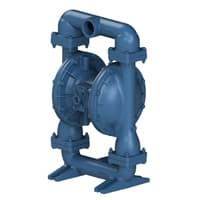
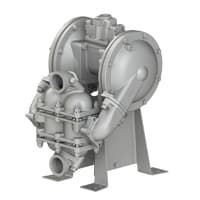
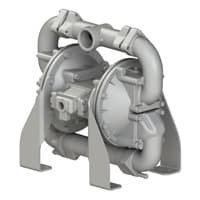
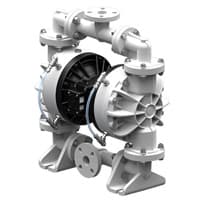
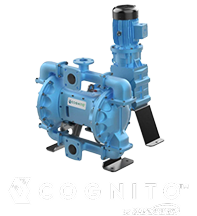
Now part of the SANDPIPER portfolio, Cognito EODD pumps help manufacturers reduce energy use, simplify maintenance, and improve reliability in industrial fluid-transfer applications.
When comparing an electrically operated double-diaphragm (EODD) pump with a hose pump, also known as a peristaltic pump, it's important to evaluate more than pumping performance alone. Every wear component, every maintenance interval, and every hour of downtime contributes to the total cost of ownership over the life of the equipment.
This article compares hose and EODD pumps through the lens of operational demand. It focuses on the factors that influence maintenance requirements, energy consumption, reliability, and lifecycle cost so maintenance and operations teams can make informed decisions.
This article compares hose and EODD pumps through the lens of operational demand. It focuses on the factors that influence maintenance requirements, energy consumption, reliability, and lifecycle cost so maintenance and operations teams can make informed decisions.
Why Operational Demand Matters
The purchase price of a pump is only one part of the investment. Over years of operation, recurring costs often have a much greater impact on total ownership costs.
Operational demand includes factors such as:
- Energy consumption throughout daily operation
- Wear-part life and replacement intervals
- Maintenance labor requirements
- Downtime caused by planned or unplanned repairs
- Reliability under continuous operation
- Safety and fluid containment
- Total cost of ownership (TCO) over the equipment lifecycle
Plants that evaluate pumping technologies using these factors often identify opportunities to reduce operating expenses while improving reliability.
Hose Pumps and the Reality of Recurring Hose Wear
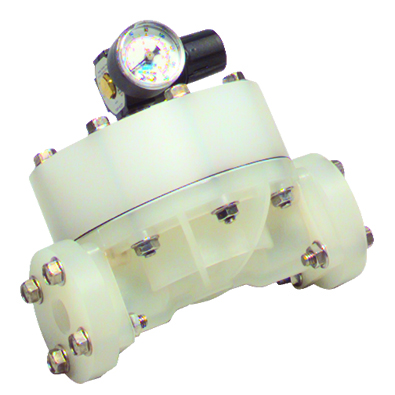
A hose pump transfers fluid by compressing a flexible hose with rotating rollers or shoes. Because the process fluid remains inside the hose, the pump housing stays isolated from the media.
This operating principle makes hose pumps suitable for many challenging applications involving:
- Abrasive slurries
- High-viscosity materials
- Solids-laden fluids
- Shear-sensitive products
These characteristics can make hose pumps an effective choice when isolation of the process fluid from other pump components is a priority or when an application involves abrasive, viscous, solids-laden, or shear-sensitive fluids.
However, the hose itself is the primary wear component. Unlike a mechanical seal or bearing that may last for years under favorable conditions, the hose is intended to be replaced periodically. Replacement frequency depends on several operating conditions, including:
- Pump speed
- Discharge pressure
- Fluid abrasiveness
- Chemical compatibility
- Operating temperature
- Daily duty cycle
For plants operating around the clock, hose replacement can become part of routine maintenance planning. Every replacement requires spare parts, maintenance labor, and production downtime.
This doesn't mean hose pumps are the wrong choice. Many applications benefit from their operating principle. It does mean maintenance teams should evaluate hose replacement requirements as part of the overall lifecycle cost rather than viewing the hose as a minor consumable.
Hose Life Can Affect the Entire System
When evaluating a hose pump, hose life deserves careful attention because it directly affects maintenance scheduling and production planning.
Several operating conditions can accelerate hose fatigue:
- Extended daily run times
- Higher operating speeds
- Elevated discharge pressures
- Abrasive process fluids
- Aggressive chemicals
- High operating temperatures
Planned hose replacement allows maintenance teams to schedule downtime, stock replacement hoses, and allocate labor resources.
Unexpected hose failure introduces additional challenges. Production interruptions may occur while the hose is replaced. Depending on the application, cleanup or fluid containment procedures may also be necessary before the pump returns to service.
Looking at hose replacement across the full pump lifecycle provides a more accurate picture of long-term operating costs.
Why EODD Pumps Can Reduce Operational Demand
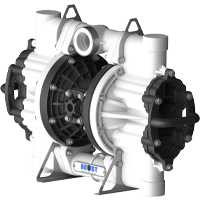
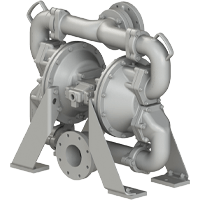
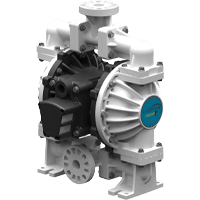
EODD pumps use an electric motor to drive a reciprocating diaphragm system. The result is positive displacement pumping without mechanical seals or compressed air.
Cognito EODD pumps incorporate several design features that reduce maintenance requirements while supporting dependable operation in industrial applications. These include:
- Sealless construction that eliminates mechanical seal failures
- Dry-run capability without damaging the pump
- Ability to transfer solids, slurries, abrasive fluids, and changing viscosities
- Oversized diaphragms with reduced stroke length to support extended diaphragm life
- Simplified maintenance that can help reduce mean time to repair (MTTR)
- Electric operation that eliminates the energy losses associated with compressed air systems
Cognito EODD pumps also include standard leak detection capabilities to help protect both the pump and the process. Connected monitoring solutions support remote monitoring along with predictive and preventive maintenance strategies.
EODD Pump vs. Hose Pump Comparison
|
Operational Factor |
Hose Pump |
Cognito EODD Pump |
|
Energy efficiency |
Varies by application |
Electric operation avoids compressed air energy losses |
|
Primary wear component |
Hose |
Diaphragms and valve balls |
|
Routine maintenance |
Scheduled hose replacement and lubrication change |
Simplified diaphragm and wear-part maintenance and lubrication change |
|
Dry-run capability |
Application dependent |
Designed to run dry without pump damage |
|
Solids and slurry handling |
Excellent |
Excellent |
|
Abrasive fluid handling |
Strong capability |
Designed for abrasive fluids with hardened internal components |
|
Downtime risk |
Influenced by hose replacement schedule |
Designed to simplify maintenance and extend wear-part life |
|
Fluid containment |
Fluid remains inside hose |
Sealless construction with leak detection capability |
|
Total cost of ownership |
Influenced by recurring hose replacement |
Lower maintenance requirements can reduce lifecycle operating costs |
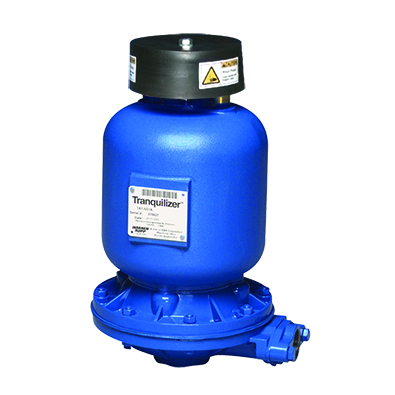
In applications where pulsation management is a consideration, dampeners can be added to an EODD pumping system to help reduce pulsation and vibration while supporting smoother flow and reducing stress on connected equipment.
Every application is different, so pump selection should always consider actual operating conditions rather than focusing on a single performance specification.
Connected Monitoring for Proactive Pump Maintenance
Reducing operational demand is not limited to mechanical design. Connected monitoring technologies give maintenance teams better visibility into pump performance and equipment health.
Cognito connected capabilities support:
- Leak detection for pump and process protection
- Remote monitoring of operating conditions
- Preventive maintenance planning
- Predictive maintenance based on operating data
- Early identification of abnormal operating conditions
Instead of reacting to unexpected failures, maintenance teams can use operating data to schedule service during planned maintenance windows.
This approach supports plant reliability goals while helping organizations pursue energy reduction and sustainability initiatives.
Questions to Ask Before Selecting a Pump
Every application has different operating requirements. Before selecting either a hose pump or an EODD pump, maintenance and engineering teams should consider:
- What fluid is being transferred?
- How abrasive or viscous is the process fluid?
- How many hours per day will the pump operate?
- Is dry-run capability important?
- Which components require routine replacement?
- How often will those parts need inspection or replacement?
- What happens if the primary wear component fails unexpectedly?
- How much maintenance labor is available?
- What are the pump's actual energy requirements at the intended operating point?
These questions help move the evaluation beyond initial purchase price and toward lifecycle performance.
Selecting the Lowest-Demand Pump for Your Application
Hose pumps are an effective solution for many industrial fluid-transfer applications, particularly where fluid containment within the hose is beneficial.
At the same time, recurring hose replacement should be included when evaluating maintenance requirements and lifecycle operating costs.
Cognito EODD pumps provide a sealless, dry-run capable solution that handles solids, slurries, abrasive fluids, and changing viscosities while reducing maintenance demands.
Their electric operation, simplified service, and connected monitoring capabilities support operation during long duty cycles.
The most effective pump selection process considers energy use, wear-part life, maintenance labor, reliability, and total cost of ownership together, rather than focusing only on upfront equipment cost.
Want to determine whether an EODD pump or a hose pump is the better fit for your application? Contact the SANDPIPER team or schedule a 15-minute Q&A session to discuss your fluid transfer requirements with an application specialist.
Pump specifications may vary by region. Please contact your local sales team for more information.

