

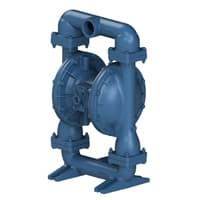
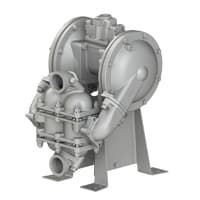
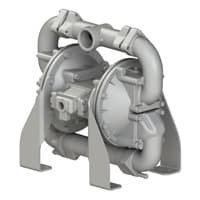
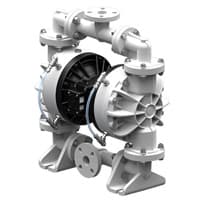
When evaluating pumps for a new application, most of the discussion focuses on flow rate, pressure, efficiency, and solids handling. Those are important to consider, but there is often one factor that gets overlooked: material construction.
One of the most common misconceptions in the industry is that non-metallic pumps are less capable than metallic pumps. The assumption is understandable. Metallic materials look rugged, feel durable, and are typically associated with heavy industrial service. But appearance alone doesn't determine durability. It’s much simpler: the best material is the one that is compatible with the fluid and operating conditions.
A stainless steel pump may be mechanically strong, but if it's transferring a chemical that gradually attacks the material, that strength becomes less relevant over time. Likewise, a Polypropylene pump may not appear as rugged as a metallic pump, yet it can significantly outperform that pump in corrosive applications because it resists chemical attack.
At Cognito, we've found that many pump reliability issues can be traced back to material selection decisions. Understanding when metallic and non-metallic construction is appropriate is one of the most effective ways to improve reliability, reduce maintenance, extend pump life, and lower the total cost of ownership.
What Does Non-Metallic Actually Mean?
The Problem
The term "non-metallic" often creates the wrong impression. Many people hear the word and think of consumer plastics or lightweight materials used for light-duty applications. Industrial non-metallic pumps are entirely different.
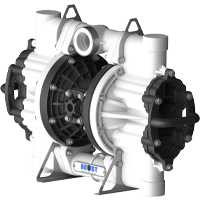
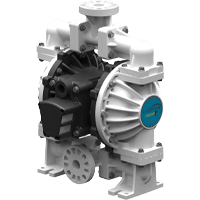
Non-metallic pumps are built using engineered polymers selected specifically for their chemical resistance and compatibility with challenging process fluids. Common materials include polypropylene, conductive polypropylene, and PVDF.
In many chemical processing pumps and chemical transfer pumps, the goal isn't simply to move fluid. It’s to move fluid safely and reliably without corrosion-related failures. That's where engineered polymers can offer an advantage.
The question shouldn't be whether a material is metallic or non-metallic. It should be whether it can withstand the environment in which it will operate.
When Metallic Pumps Are the Right Choice
The Problem
There are many applications where metallic pumps are the preferred option.
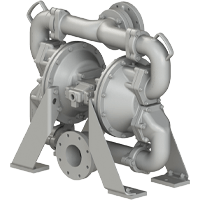
Materials such as aluminum, stainless steel, and cast iron have advantages in environments where mechanical strength is a concern. High-impact installations, elevated temperatures, and certain abrasive services often benefit from metallic construction.
Industries such as mining, ceramics, construction materials, and paints and coatings often use metallic pumps because they can withstand challenging physical conditions.
For example, abrasive solids can cause significant wear in some applications. In these environments, the mechanical durability of metallic construction may outweigh concerns about corrosion.
However, evaluating abrasion resistance without considering chemical exposure can create problems. Many industrial processes expose equipment to both abrasive and corrosive conditions. Looking at only one factor can lead to material choices that solve one problem while creating another.
The best choice comes from evaluating the entire application rather than a single operating parameter.
When Non-Metallic Pumps Are the Better Choice
The Problem
While metallic pumps excel in many environments, non-metallic pumps are often the better choice when chemical compatibility is a concern.
Chemical processing facilities, wastewater treatment plants, battery manufacturers, and specialty chemical producers frequently handle fluids that can attack metallic materials over time. In these environments, corrosion-resistant pumps constructed from engineered polymers can provide many advantages, including:
- Excellent resistance to corrosive chemicals
- Reduced maintenance caused by material degradation
- Improved fluid containment
- Longer service life
- Lower lifecycle costs
- Reduced risk of leakage
The difference is particularly noticeable in aggressive chemical applications. When a material resists chemical attack, the pump spends less time being repaired and more time operating. Common applications include chemical transfer, chemical dosing systems, effluent handling, wastewater treatment, battery manufacturing, and specialty chemical processing.
This is one reason Polypropylene pumps have become a popular choice in many corrosive services. The material's resistance to a broad range of chemicals allows facilities to improve reliability while reducing maintenance demands.
Why Cognito Non-Metallic EODD Pumps
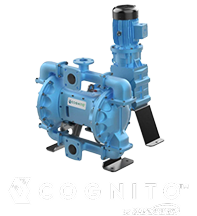
In Cognito non-metallic EODD pumps, the benefits of engineered polymer construction combine with features that further improve uptime and reliability. A sealless design eliminates one of the most common leak paths found in traditional pump technologies, while leak detection probes provide an additional layer of protection when handling hazardous or valuable process fluids. Dry-run capability helps prevent damage when fluid supply is interrupted, and the solids-handling capability allows it to perform effectively in applications that contain suspended particles or abrasive slurries.
In addition, oversized diaphragms operating at a reduced stroke length help extend diaphragm life and contribute to longer mean time between failures (MTBF), which helps facilities extend maintenance intervals and reduce unplanned downtime.
Cognito's non-metallic EODD pumps are ideal for both corrosive fluid transfer and many abrasive slurry applications where reliability, containment, and long-term operating costs are top considerations.
The Long-Term Impact of Corrosion
Many facilities underestimate the true cost of corrosion. The expense is rarely limited to replacing damaged components. Corrosion can affect maintenance budgets, labor requirements, production schedules, environmental compliance efforts, and employee safety. As corrosion progresses, it can damage sealing surfaces, alter internal clearances, and create leakage paths that compromise pump performance and reliability.
Signs Your Pump Material May Not Be Compatible
Some common warning signs of material incompatibility include:
- Visible corrosion
- Swelling or softening of components
- Unusual wear patterns
- Frequent diaphragm failures
- Reduced flow performance
- Shortened maintenance intervals
If any of these symptoms are occurring, it’s worth reevaluating the pump's wetted materials and chemical compatibility with the process fluid.
A corroded pump may require:
-
More frequent inspections
-
Additional spare parts inventory
-
Increased maintenance labor
-
Emergency repairs
-
Production interruptions
-
Cleanup and containment activities
These costs often exceed the initial purchase price of the pump itself. That's why the lowest-cost pump is not always the most economical choice. The most cost-effective solution is the one that delivers reliable performance throughout its service life.
When properly specified, both metallic and non-metallic pumps can provide excellent long-term value. The key is selecting the material that best matches the operating environment.
Looking Beyond Corrosion
Corrosion is important, but it isn't the only factor that should impact material selection. Engineers should also consider:
Temperature
Some applications involve elevated fluid temperatures that can influence material selection. It’s necessary to understand operating temperatures and temperature excursions when evaluating Industrial pump materials.
Abrasion
Slurries, solids, and abrasive particles can affect material performance. Depending on the application, metallic pumps may offer advantages, although some non-metallic pumps can also perform effectively in abrasive services.
Chemical Compatibility
Every fluid presents a unique set of challenges. Concentration, pH, temperature, and exposure duration all influence compatibility.
Safety
Material degradation increases the risk of leaks and environmental exposure. Proper material selection plays a direct role in maintaining containment and protecting personnel.
Successful pump selection requires balancing all of these considerations rather than considering only one.
Why EODD Technology Maximizes Material Advantages
Material selection is critical, but pump design also matters. An electrically operated double diaphragm (EODD) pump combines the benefits of diaphragm technology with efficient electric operation and flexible material options.
Perhaps most importantly, EODD technology is inherently sealless.
Mechanical seals are one of the most common failure points in rotating equipment. By eliminating seals, sealless pumps reduce leakage risks and simplify maintenance.
Cognito's EODD pump platform combines these benefits with material flexibility, allowing facilities to select the construction best suited to their application.
Additional benefits include:
-
Dry-run capability
-
Self-priming operation
-
Solids handling capability
-
Reliable fluid containment
When paired with the appropriate construction material, an industrial diaphragm pump can deliver exceptional uptime and reliability in both corrosive and abrasive applications.
Six Questions to Ask Before Selecting Pump Materials
Before selecting a pump, start with the fluid. Some of the most successful pump installations begin by answering a few basic questions:
- What chemicals are being transferred?
- Is corrosion a potential concern?
- Are solids or abrasive particles present?
- What temperatures will the pump experience?
- What maintenance resources are available?
- What are the consequences of unexpected downtime?
The answers to these questions usually reveal which material options deserve the most consideration.
In addition, material selection should account for chemical compatibility, pH, temperature, abrasiveness, solids content, viscosity, duty cycle, installation environment, and whether the process fluid is hazardous or contamination-sensitive.
Rather than assuming one material is universally better than another, engineers should evaluate the actual operating conditions and determine which construction offers the best balance of reliability, maintenance requirements, and lifecycle cost.
Material Matters More Than Most People Think
The biggest misconception about non-metallic pumps is that they are somehow less capable than metallic pumps. The truth: Neither material category is inherently better. Each has strengths, limitations, and applications where it performs best.
Metallic pumps often provide advantages in physically demanding environments where mechanical strength and impact resistance are priorities. Non-metallic pumps excel when chemical compatibility and corrosion resistance are the primary challenges.
The most successful pump installations are not built around the strongest-looking material. They are built around the most appropriate material.
By focusing on fluid characteristics, operating conditions, and long-term reliability, facilities can make better pump material selection decisions, reduce downtime, improve safety, and lower the total cost of ownership.
When that material selection is paired with Cognito's sealless EODD pump technology, operations gain a dependable solution that handles challenging industrial fluids safely and efficiently.
Need Help Selecting the Right Pump Material?
Whether you're evaluating chemical compatibility, abrasion resistance, temperature requirements, or total cost of ownership, Cognito's specialists can help identify the right Metallic or Non-Metallic EODD pump for your process.
Schedule a 15- or 60-minute virtual training session with the Cognito team.
Pump specifications may vary by region. Please contact your local sales team for more information.

